
Sights and history of Orebić
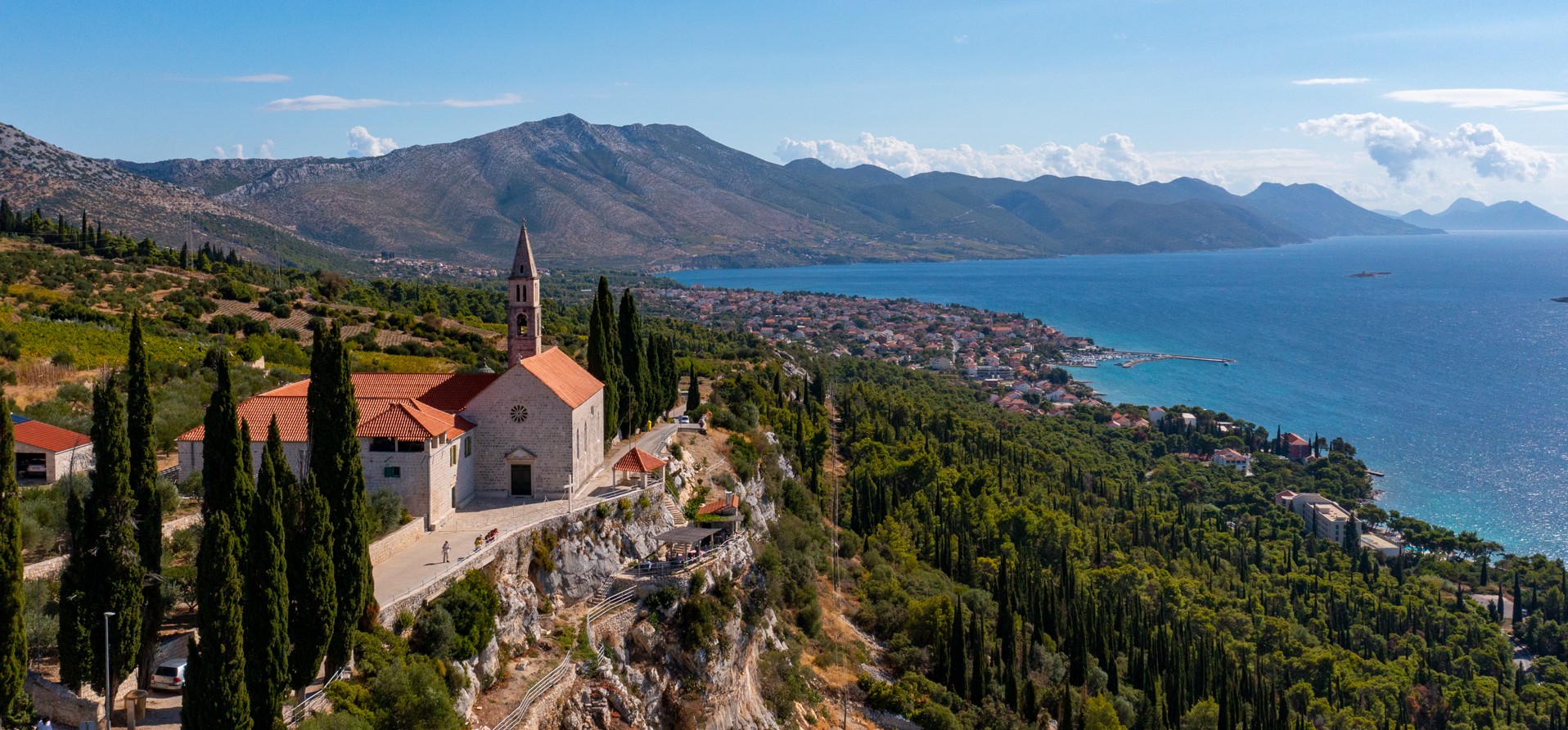
A maritime heritage intertwined with nature
For centuries, Orebić lived from the sea. From the 14th century, Pelješac was part of the Republic of Dubrovnik, and the town took its name from the Orebić seafaring family, who built a castle in the fortified settlement by the shore in the 16th century. Orebić's golden age came in the 19th century: the Pelješac Maritime Society was founded here in 1865, and captains built spacious stone houses along the coast, with gardens full of Mediterranean and exotic plants brought back from their voyages, which still give Orebić its distinctive look.
Five landmarks of the captains' town
The Maritime Museum
The museum on Trg Mimbelli preserves the memory of the seafarers and sailing ships that made Pelješac famous.

Monastery of Our Lady of the Angels (Gospa od Anđela)
A monastery from 1470 on a cliff two kilometers west of the center. For centuries it was a landmark for seafarers: captains saluted it, and the Franciscans answered with the bell. Its terrace offers one of the finest views of the Pelješac Channel and Korčula.

Captain’s Houses
Captains' houses from the 18th and 19th centuries, with stone façades and gardens, line the promenade in Orebić and neighboring Kučište. Kuća Fisković, dating from the 17th century, took on its present appearance in 1836.

Church of Gospa od Karmena
In the hamlet of Karmen above Orebić stands a church with an early 17th-century baroque façade and a baroque loggia, with medieval graves nearby.

St. Elijah (Sveti Ilija)
The highest peak of Pelješac (961 m) and the backdrop of every Orebić postcard. The climb from the town takes about three to three and a half hours one way, and on a clear day the summit offers views of Korčula, Hvar and Mljet.

Your Perfect Holiday Starts Here