
Sights and history of Novi Vinodolski
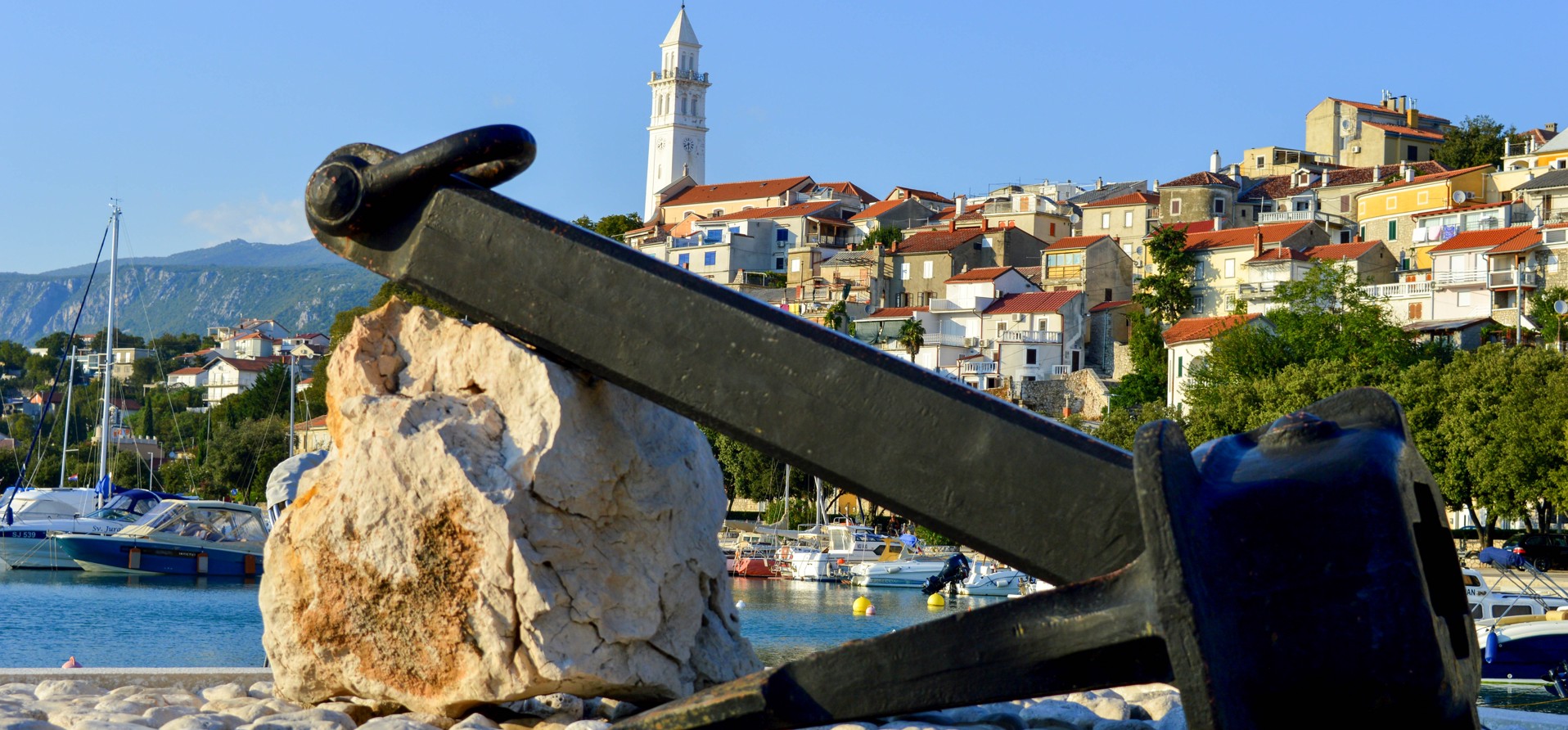
The town of the 1288 Vinodol Code
Traces of life around Novi Vinodolski go back to prehistory, as finds from the Vlaška peć cave near Kozica show. By the sea, in Lišanj Bay, lie the remains of the late antique fortress of Lopar, which guarded the coastal road from Tarsatica, today's Rijeka, to Senj.
In the 13th century, the Princes of Krk, later known as the Frankopans and lords of Vinodol, built the castle and the fortified town of Novi. It was in this castle, on January 6, 1288, that the Vinodol Code was written, regulating relations between the princes and the nine Vinodol communes.
Written in Glagolitic script, it is one of the oldest legal documents written in the Croatian language.
At the end of the 15th century, the seat of the Diocese of Modruš moved to Novi, and the Church of St. Philip and St. James became a cathedral.
In the 19th century, the town turned to the sea: the first bathing establishment opened in the harbor in 1878, followed in 1894 by the first hotel, Lišanj.
Sights of old Novi
The Old Town
Narrow stone streets and small squares around the castle, at their best in the early evening and in summer, when Okolotorno brings them to life.

Frankopan Castle and Turnac Tower
A 13th-century castle where the Vinodol Code was written. Today it houses the town museum, a gallery and the National Reading Room, founded in 1845.

Church of St. Philip and St. James
A 14th-century church with three naves, once the cathedral of the Diocese of Modruš, with a free-standing bell tower 36 meters high.

The Vinodol Code monument
Commemorating the law written in Novi in 1288, the most famous document in the town's history.

Lopar and Ledenice fortresses
The remains of the late antique fortress of Lopar in Lišanj Bay and the ruins of the medieval town of Ledenice on the hill above the sea, with a tower and the Church of St. Stephen.

Your Perfect Holiday Starts Here