
Sights and History of Novigrad
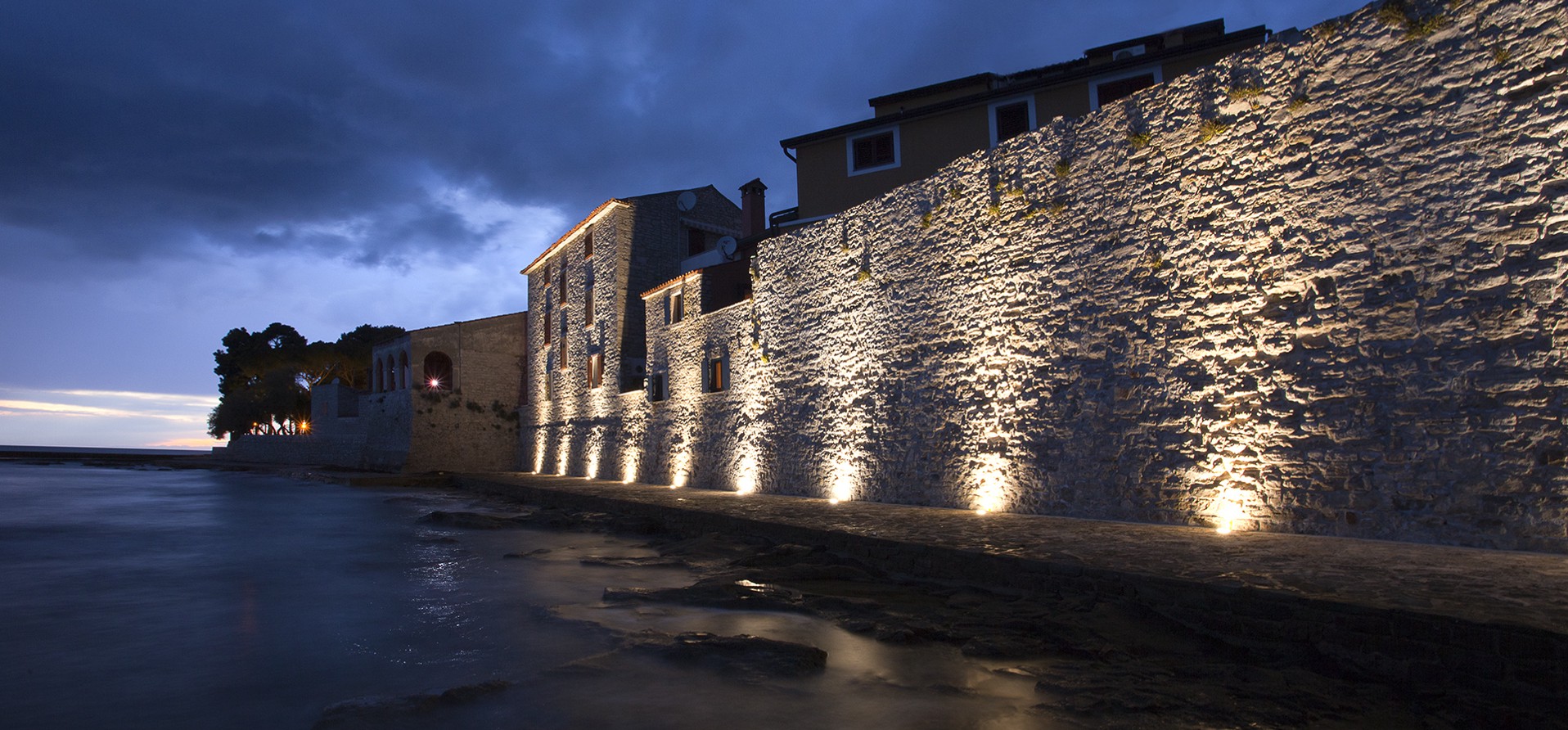
Star-Shaped Walls & Centuries of Legacy
Novigrad was founded by the Illyrians, and in the 2nd century BC it came under Roman rule and became a regional centre of crafts and trade. You can still see traces of that past in the Lapidarium Museum. After the fall of the Roman Empire, Novigrad became part of Byzantium, and in the 13th century the Venetians took over. They built the crenellated walls with towers and the bishop's palace that still define the look of the old town. With the fall of the Republic of Venice at the end of the 18th century, Novigrad came under Austrian rule.
Five landmarks of the old town
The City Walls
Novigrad's most complete architectural monument. The Venetian walls and towers once protected the town from the sea, and today one of the loveliest walks in Istria runs alongside them, especially in the early evening.

The Parish Church of St. Maximus and St. Pelagius
Dedicated to St. Maximus and St. Pelagius, the town's patron saint, the church was built on foundations from the 5th and 6th centuries. Beneath it lies a crypt, and in front of the church the view opens out to the sea.

The Free-Standing Belfry
Built in 1874 after the model of St. Mark's bell tower in Venice, it is topped by a statue of the town's patron saint, St. Pelagius. It is Novigrad's most recognizable landmark and can be seen from far out at sea.

Belvedere Loggia
The only seaside loggia in Istria, dating from the 16th century. Open towards the open sea, it's a place to pause and photograph the sunset.

Neo-Gothic Palace
In the center of Novigrad, built in the 1920s in the style of Venetian Gothic. A reminder that Novigrad has always looked to Venice across the sea.

Your Perfect Holiday Starts Here